
The Future Flock National Advisory Panel
The Future Flock is the development of a national strategy led by Sheep Producers Australia (SPA) to provide a clear and unifying vision for the Australian sheep industry.
For the first time, the strategy will bring sheepmeat and wool together under a single framework.
The strategy will:
-
Unite national and state priorities under one framework, with dedicated implementation pathways (including a WA Roadmap to 2028).
-
Build on existing work and strategies across the supply chain.
-
Foster collaboration by linking producers, processors, researchers, government and community stakeholders.
-
Use evidence and economic analysis to identify impactful pathways.
-
Deliver a living, interactive plan that supports advocacy and industry engagement.
Meet the Advisory Panel

Angus Hobson
Chair
Angus’ passion for livestock production stems from his family’s pioneering grazing interests in the Monaro region of southern NSW, dating back to the early 1800s. Six generations on, Angus and partner Hannah operate a progressive sheep and cattle breeding business, producing fine wool, lamb and beef. The business spans operations on the original family property near Bombala, their home property near Delegate, and agistment (contract finishing) blocks in southern NSW.
Prior to returning to full-time farming, Angus had an extensive career spanning two decades and several executive roles across the advocacy, service provider and commercial sectors of the red meat and livestock industry, including: CEO of the Red Meat Advisory Council, Chair of the Southern Australia Meat Research Council, and senior roles with Meat & Livestock Australia (MLA). Angus has also served as a Director on the Boards of Monaro Farming Systems, WoolProducers Australia and Nutrition Service Associates.

Chad Taylor
With six generations of sheep breeding in the Taylor family, Chad and his wife Louise have combined traditional farming experience with cutting-edge breeding technologies to produce the modern Mumblebone Merino. Using advanced tools to drive measurable genetic gain, Mumblebone is now well established as an industry leader in aligning high-performance production goals with the increasingly discerning needs of their customer. Mumblebone’s industry-wide recognition speaks to the company’s unerring focus on innovative breeding and their quality team to bring it all together.

Beth Green
Beth Green has over 30 years of experience in agronomy, research and biosecurity, specialising in livestock traceability, food safety, market access, and compliance. As an independent consultant with Magnify Agriculture Global, Beth supports producers, industries, and governments to enhance agricultural efficiency while safeguarding product integrity, animal welfare, and consumer trust. All with the aim of helping keep farmers farming in line with their own business priorities.
Beth has contributed to national traceability systems across the livestock sector as well as honeybees, serving on national committees to shape standards, legislation, and training. She is an independent director on the Board for the Bee Industry Council of WA and on the inaugural Governance Committee assisting the Board for the CWA of WA.
Currently Beth is working on a project with Curtin University and WA Farmers, providing an independent service to assist WA producers move into eID for sheep and to establish the value consumers place on traceable sheep meat products.
Beth is passionate about raising consumer awareness of food origins and respect for those who produce it.
.jpg)
Sally Martin
Growing up on a grazing property on the Monaro in NSW, Sally developed a passion for livestock and agriculture. She pursued a Bachelor of Agricultural Science at UWS Hawekesbury followed by postgraduate studies at University of New England and Sydney University specialising in Genetics and Animal Breeding and Project Management.
Sally’s career has taken several paths, working with NSW DPI for 20 years, before establising her own consultancy business, SheepMetriX, in 2011. Based in Young NSW, SheepMetriX supports sheep and goat producers across Australia and internationally, with a focus on assisting clients capture and utilise data to make informed decisions around breeding program design, genetic selection, reproduction performance and grazing management.
Sally has been involved in delivering major industry extension and research initiatives, with a strong emphasis on translating science into practical, on-farm solutions in the sheep genetics space.
She serves on several industry boards and committees, including National Livestock Genetic Consortium Taskforce, Sheep Genetics Advisory Committee, Precision Sheep Management Project, Measured Goat Project, NSW eID Implementation Reference Group, Peter Westblade Scholarship and Monaro Farming Systems group.
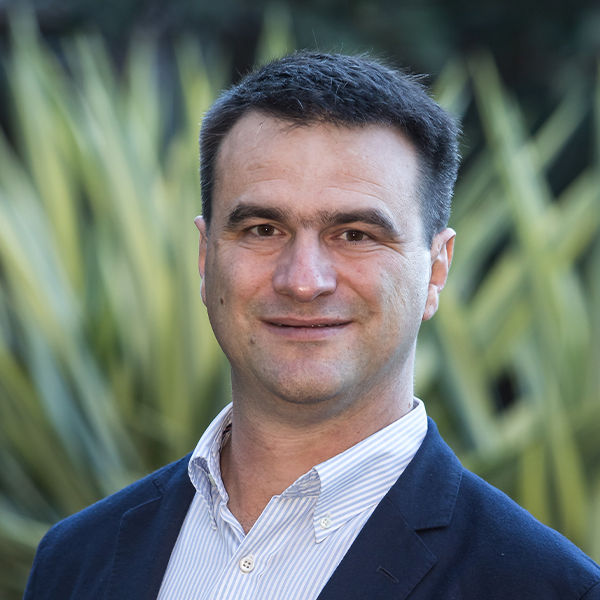
Lachlan Monsbourgh
Lachlan is an experienced leader in agricultural sustainability and environmental strategy, currently serving as Agricultural and Environmental Lead for Rabobank’s Global Rural Clients. He oversees initiatives to measure Scope 3 emissions and nature-related data across 15,000 rural enterprises and contributes to global sustainability policy development. Lachlan also plays an active role in shaping industry standards through positions on advisory boards and technical committees, including the Australian Sheep Sustainability Framework and Cattle Australia.
With a career spanning more than two decades, Lachlan has worked across diverse agricultural systems in Australia, Asia, Africa, and Latin America. His work has included developing sustainability frameworks, carbon credit strategies, and partnerships with global brands and industry bodies. Combining practical experience with strategic insight, he focuses on creating solutions that balance environmental outcomes with commercial realities in the global food and agriculture sector.
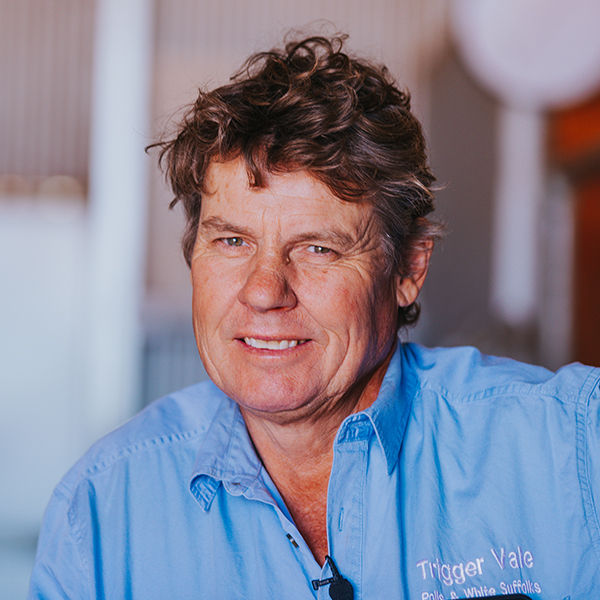
Andrew Bouffler
Andrew is the Managing Director of Valera Pastoral Company, a mixed sheep/wheat family-controlled business that has maintained a traditional balance between cropping and livestock enterprises. He is also the Principal of the Trigger Vale Maternal Poll Merino and Terminal White Suffolk studs, which maximise genetic gain and client profitability by performance testing using Genomics, LAMBPLAN and MERINOSELECT genetic evaluation technologies.
Andrew has a Bachelor of Agricultural Economics from the University of New England and is a graduate of the Duchy College Challenges of Rural Leadership Course held in the United Kingdom in 2009. In 2010 he participated and completed the Australian Institute of Company Directors course.
Andrew received a Nuffield Scholarship which he completed in 2007, during this time he investigated how to fully utilise and rapidly improve the Australian maternal ewe flock (including Merinos) to ensure continuity of supply to Australia’s valuable meat and wool markets. This time of study and reflection about genetics, management and how sheep interact with their environment has greatly impacted his approach to, not only his own stud and commercial sheep flocks, but also his growing client base and the wider Australian sheep industry. The winds of change towards an easy care, multi-purpose Merino is sweeping across the Australian sheep industry and Andrew is considered by many as one of the most influential seed stock producers leading the charge.
Over the past 30 years, Andrew has been an active member of numerous industry boards and organisations including the Sheep Genetics Advisory Board, Rutherglen Sheep CRC Advisory group, AWI’s MLP advisory committee at the Merinolink site at Temora and is currently Chairman for the Superwhites Young Sire Evaluation Program.

Dr Holly Ludeman
Dr Holly Ludeman is an Agricultural Scientist and Veterinarian with extensive experience across Australia’s livestock export and production animal industries. In her role as Corporate Governance and Compliance Officer at Emanuel Exports, she leads animal welfare, regulatory compliance, and continuous improvement programs spanning live export and domestic feedlot operations.
In 2019, Holly founded The Livestock Collective, a not-for-profit organisation focused on rebuilding public trust through real, on-the-ground stories from people working in the live export sector. The Collective has played a key role in countering misinformation and empowering individuals across the supply chain to share their experiences, particularly during times of heightened public scrutiny.
Holly brings a systems-based perspective grounded in science, governance, and communication to the Future Flock National Strategic Advisory Panel. She is passionate about uniting the sheepmeat and wool industries under a shared, evidence-based vision that supports resilience, profitability, and public confidence in Australian agriculture.
.jpg)
Patrick Hutchinson
Patrick Hutchinson is a nationally recognised leader in agribusiness strategy, sustainability, and trade. As Director of Gibraltar Strategic Advisory, he brings more than 25 years of senior experience across red meat, poultry, seafood, agrifood tech, and international trade. Patrick advises Australian and global clients on ESG frameworks, stakeholder engagement, market access strategy, and industry transformation.
He is Chair of the Australian Beef Sustainability Framework, Chair of Dairy Australia Calfways Program, Chair of the AgriTrade Forum of the Australia China Business Council, Chair of Oysters Australia, Chair of Seafood Industry Australia (SIA) International Trade Committee and a Member of the Advisory Boards of ExoFlare and Leading Harvest Australia, as well as a former CEO of the Australian Meat Industry Council. Patrick has played leading roles in trade policy negotiation, Free Trade Agreements, and major bilateral agricultural initiatives across Asia, North America, and the Middle East.
With a reputation for strategic clarity, cross-sector leadership, and high-level diplomacy, Patrick’s board contributions span ESG, trade, stakeholder management, and innovation. He is a GAICD graduate and frequent keynote speaker and advisor to ministers, CEOs, and government departments. His work is grounded in trusted networks, systems thinking, and real-world impact.

Dr Alex Ball
Alex has been a contributor to Australian agricultural industries, especially in red meat, over the last 29 years. During that period, he has demonstrated skills in RD&A program management, strategy development and implementation, portfolio analysis, industry engagement and consultation, industry representative structures, corporate governance and more recently in natural capital, sustainability frameworks, ecosystem services and their implementation and evaluation. Alex has participated in the development and implementation of several national industry and cross-sectoral RD&E strategic plans, CRCs, and RRFP projects as well as their review. Alex maintains an active interest in R&D, being an adjunct Professor at the University of New England (UNE). He is the chair of the Northern Tablelands LLS, a board member and FRAC member of the NSW LLS, chair of the NLIS device standard s committee and an independent board member of Datagene and the SRS genetics company. Alex has a beef and seedstock business at Armidale NSW.

Chris Mirams
Chris is the Principal of Chris Mirams & Associates, a consultancy that provides operational and strategic advice to the agricultural industry and delivers farmer education and community leadership programs. He brings a deep understanding of the challenges and opportunities of the sheep meat and wool supply chains to The Future Flock project.
Chris has had a long association with research and development corporations and is passionate about innovation, adoption and improving productivity. He is currently a director of Australian Wool Innovation Limited, APS Medical Technology Limited and Albury Wodonga Health. His key previous roles include: Director of North East Water Corporation, Executive Chair of Sheep Producers Australia, Deputy Chair of Red Meat Advisory Council, Director of Sheep Health & Welfare Trust, Director of Sheep Industry Sustainability Framework, Director of Meat Livestock Australia, Director of MLA Donor Company, Director of Integrity Systems Company. Chris is also a graduate of the Australian Institute of Company Directors Course and the Australian Rural Leadership Program.
About the National Strategic Advisory Panel
The National Strategic Advisory Panel (the Panel) provides strategic oversight and expert advice, stakeholder input into the development and implementation of The Future Flock.
Members will be appointed in their personal capacity and must act in the best interests of the Australian sheep industry as a whole.
The Panel’s key responsibilities are to:
1.
Provide strategic advice on the development of The Future Flock National Strategy, including consultation design, content, priorities and structure.
2.
Identify key challenges, risks, opportunities and solutions for the industry over the medium to long term.
3.
Advise on mechanisms for industry alignment across sheepmeat and wool, other relevant commodities and between state and national priorities.
4.
Act as an industry reference point to strengthen confidence, transparency and accountability in The Future Flock's development and delivery.
5.
Support the identification of implementation pathways, resourcing options and monitoring and evaluation frameworks.
6.
Champions delivery and publicly support The Future Flock and its development. This could include media engagements.
Co-funded & delivered by
Co-funded by


The Future Flock is a co-investment between the Australian Government and Sheep Producers Australia, drawing on partnerships throughout the supply chain.
Sheep Producers Australia has been trusted by producers and industry stakeholders to deliver industry initiatives, including stewardship of the Sheep Industry Strategic Plans (1995–2020). These provided sector-wide focus and enabled real collaboration and results.
This is a chance for Australia’s sheep industry to shape its future—building resilience, profitability and unity for decades.
Term of appointment
-
Members will be appointed for a term of 18 months, covering the development and early implementation phases of The Future Flock.
-
Members may be reappointed subject to review.
Commitment
-
The Panel will meet monthly (virtually or in person).
-
Members must commit preparation time, participate actively in discussions, maintain confidentiality of panel discussions and documents, and declare and manage any conflicts of interests.
Renumeration
-
Panel members will be reimbursed for reasonable travel, accommodation and meal expenses in line with SPA policy.
-
A sitting fee may be provided at a rate approved by the SPA Board.
Desirable Skills & Experience Matrix
Panel appointments will be made on a skills basis to ensure the breadth of expertise needed is represented.
Not all applicants need to meet every category.
Sheep Production
Specific Skills / Experience: • Sheepmeat production (commercial and stud) • Wool production (fine and broad) • Dual-purpose Merino systems Why we are looking for these skills : On-farm and industry knowledge ensures the strategy reflects the realities, challenges and opportunities across meat and wool.
Supply Chain & Markets
Specific Skills / Experience: • Processing and value-adding • Domestic and export market development • Retail, food service and consumer trends Why we are looking for these skills : Insights will help align the strategy with market realities, consumer expectations, and trade opportunities
Trade & Economics
Specific Skills / Experience: • Commodity trade (sheepmeat, wool, cross-commodity) • International market access • Agricultural economics and modelling Why we are looking for these skills : Expertise supports the design of robust economic analysis, helping to identify future industry pathways that strengthen global competitiveness.
Research & Innovation
Specific Skills / Experience: • R&D and extension in livestock systems • Genetics and productivity • Digital agriculture and technology adoption Why we are looking for these skills : To embed innovation and practice change as drivers of resilience and profitability and to ensure innovation is practical, adoptable, and drives real outcomes for producers.
Sustainability & Environment
Specific Skills / Experience: • Natural resource management • Carbon, biodiversity, and ESG frameworks Why we are looking for these skills : To support alignment with global sustainability standards and responsiveness to environmental challenges.
Biosecurity & Animal Health
Specific Skills / Experience: • On-farm biosecurity • Animal health systems • Emergency disease preparedness Why we are looking for these skills : For consideration of relevant risks and the impact of these risks on market access and production.
Policy & Regulation
Specific Skills / Experience: • Legislative and regulatory frameworks • Government processes and public policy • Red meat and wool industry structures and strategic plans Why we are looking for these skills : Insights into regulatory settings, advocacy pathways, and cross-industry alignment to ensure the strategy is workable within regulatory settings and connected to broader industry frameworks.
Advocacy & Community Engagement
Specific Skills / Experience: • Industry advocacy and representation • Social licence and community trust • Communication and media skills Why we are looking for these skills : To support collaboration across stakeholders and effective engagement.
Industry Leadership
Specific Skills / Experience: • Governance and board experience • Representing national interests over sectional ones Why we are looking for these skills : To support the Panel, provide balanced, future-focused advice.
Finance & Risk
Specific Skills / Experience: • Financial management • Risk analysis and scenario planning • Investment prioritisation (e.g. levies, RD&E funding) Why we are looking for these skills : To support the consideration of resource allocation, priorities, and industry investment.